
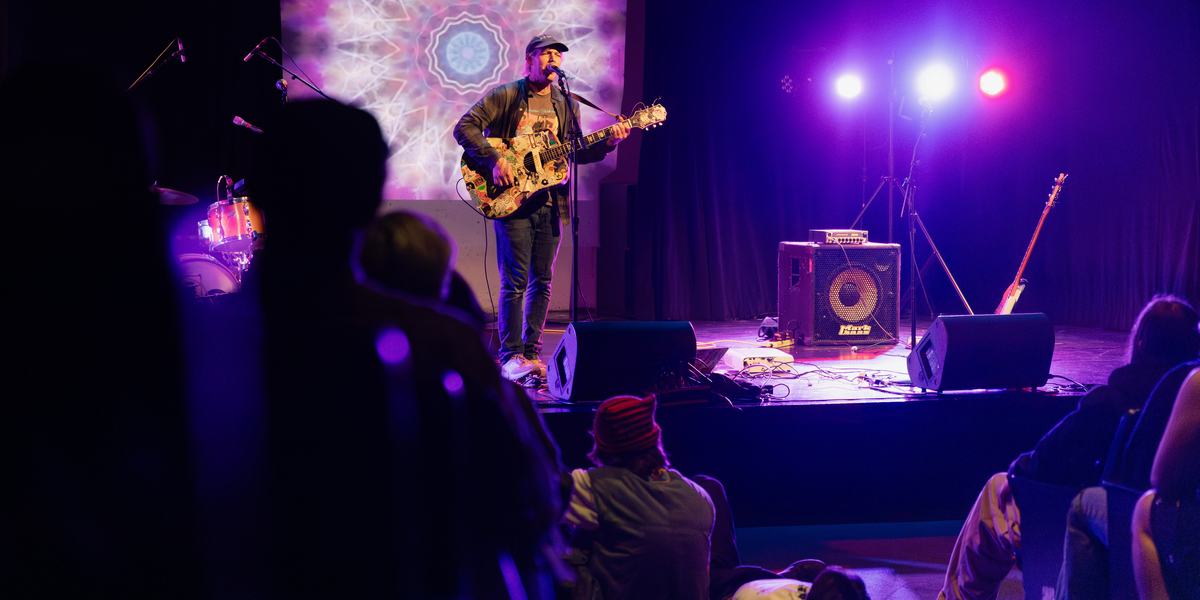
If you stood in the Old Main Theater on the night of February 28th, you would have felt the air abuzz with a shared anticipation for what was about to occur: Jeffrey Lewis, the indie, genre-bending (and -blending), multimedia artist from New York City was about to take the stage.
The crowd that was drawn not only knew of Lewis prior to this performance, but also, in a sense, felt like they knew him—in their own exploration of his work over time, they had found a piece of themselves in it. Thus, as the anticipation rose for the show to begin, there was a sense of collective familiarity and kinship, an unspoken understanding that, whatever it is, Jeffrey Lewis gets it, and that it is what we’re here for.
Julian Owens, a Western student who’s had Lewis on his radar for a while now, said that Lewis’ music feels genuine in an artistic landscape where that is less common, adding that “he feels like a local.”
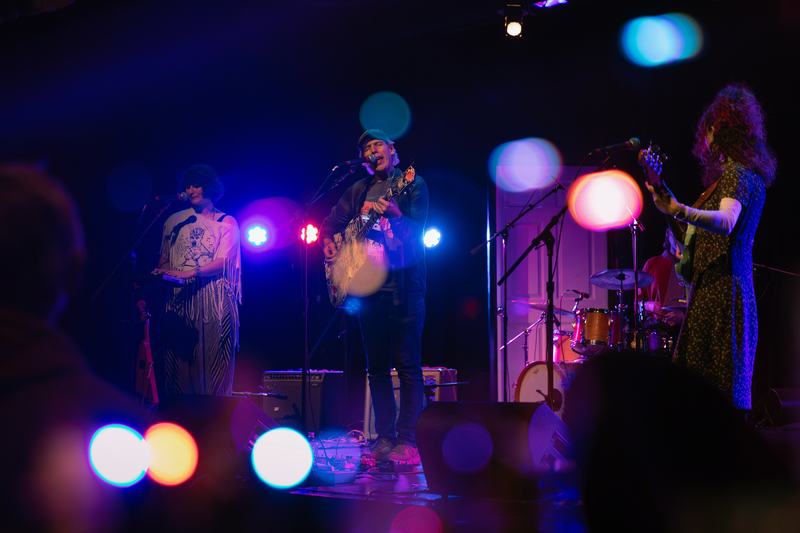
Speaking with members of the audience, I started to understand what that it is that Jeffrey gets, and what it is that draws people to him in a semi-cult-like manner.
Lace Norris and Lexi Krauel were drawn to Lewis’ show at Western from Lopez Island, after they had attempted to see him multiple times prior.
It’s the way that Lewis puts words to the very complex realities of the human experience that drew them into his music first.
“He gets, like, really real about, like, the struggles of encountering personhood, like, as a growing person and, like, what it means to be human,” said Norris.
“Yeah. And, like, you can find him one way and then be like, ‘Oh my God, he expands to this, like, whole other side’ and then find yourself in that and then find yourself in the other, the comics and the music and then find [that] everybody finds community in him, which is cool, in the collective,” added Krauel.
This sense of humanity in Lewis’ music is shared by Western student Max Rudolph, who said, “His music is so down to earth and his presence, and everything, is, like, this is just a dude that is saying everything on his mind, and it's so human.”
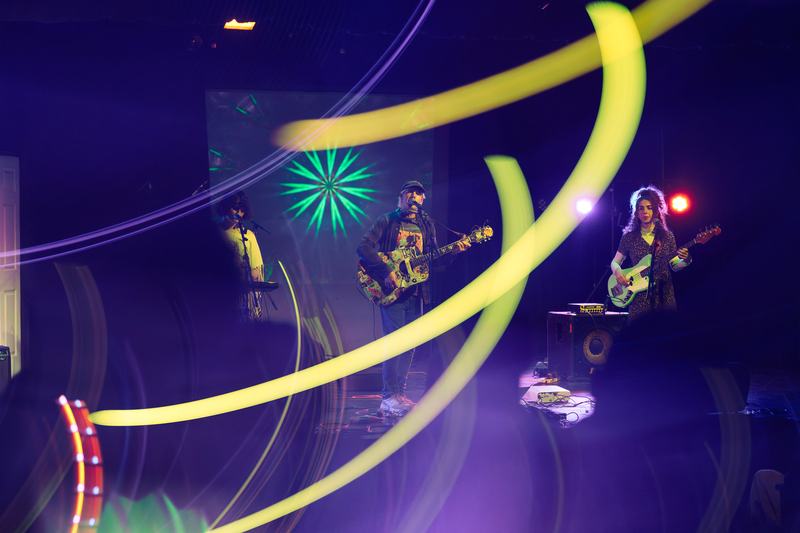
In the digitally focused, isolating zeitgeist of today, artists like Lewis, who create work with such raw honesty and humanity, can be a rare and refreshing presence. His art draws the audience into the present moment, inviting them to see not only themselves, but others, in his music, his comics, and himself.
This fostered intimacy is exactly why Ava Gedicks, AMP’s Concerts Coordinator, brought Lewis to Western.
“His music is and art is so special, [and] I think that can connect with anyone, it doesn't matter your age or demographic, or background, and I think that's important to bring. I saw that reflected in the audience that showed up—it was like a lot of students who were really excited and felt really seen by his music, and it was also like older people that came and brought their kids with them,” said Gedicks.
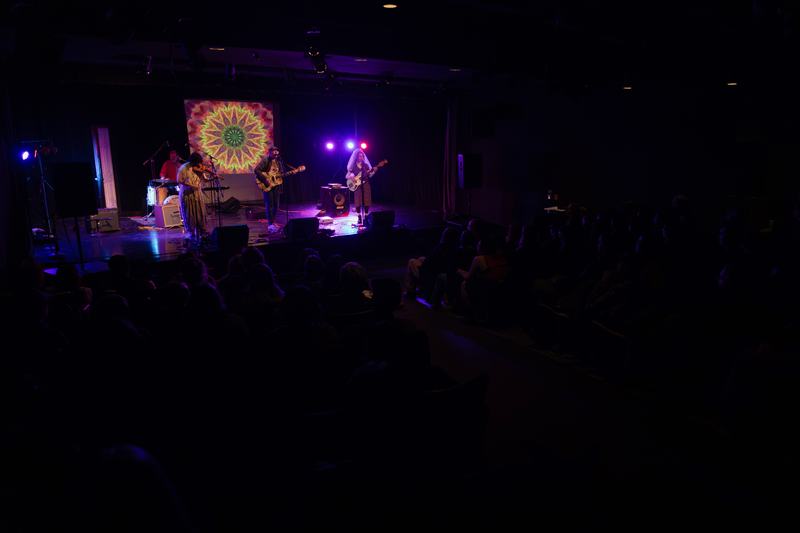
Today, in the age of AI and a widening cultural division, these authentic pockets of community are becoming harder to come by, and so, when you find one that you fit into, it’s important to foster that, as Lewis does.
In Bellingham, and at Western, intimate shows like this are an important aspect to finding and creating that community.
For McLean Bowers, a Western student and active participant in the Bellingham concert scene, the local culture allows for shows like this to become those communal spaces.
“I think Bellingham is one of the last frontiers of $20 shows, and it has been for a long time. Its relationship to bigger cities like Seattle and Vancouver make it a hot spot for smaller or medium-sized, and often ‘up-and-coming’ or ‘cult’ acts that didn't make it big--or didn't make it not big but didn't make it on the entertainment industries top charts. Bellingham is a really special place for people who seek out those musical experiences,” said Bowers.
This is exactly the sentiment that Gedicks had when looking to book Lewis—that these intimate, “word-of-mouth” shows are almost a bonding experience between the members of the audience and the artist themselves, allowing them to “feel close to the heart of the people.”
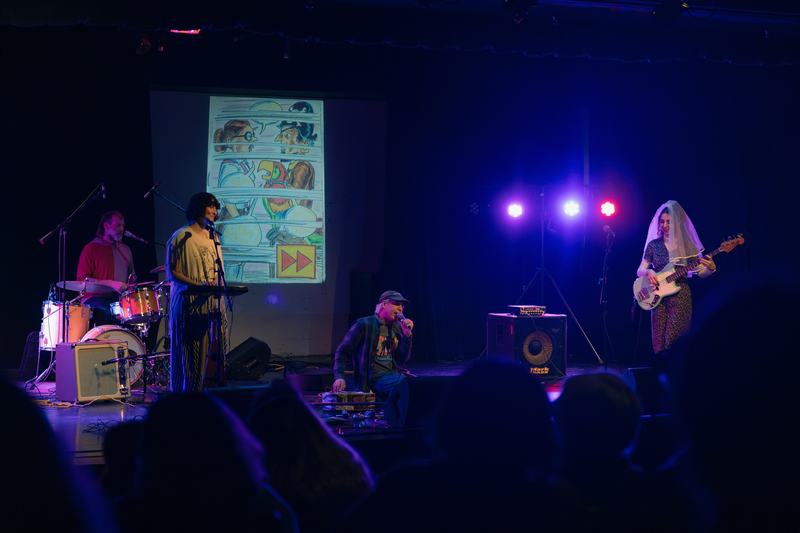
For both Owens, and Bowers, their experiences reflected what I think everyone in Old Main Theater that night would consider to be their experience—including me—that we, the audience, saw the curtain drop and found ourselves in conversation with Lewis, and Lewis in conversation with us.
As for how Lewis started that conversation, Gedicks’ understanding of why people are drawn to him summarizes my own understanding of it; “I think he speaks to a lot of the real fears of people today and, I mean, he's been around for such a long time, but I think, like, as a young person myself, the things that he says do feel very true and real to right now.”
